
Reset your metabolic rhythm
A 90 day protocol designed to support steadier energy, better appetite control and long term metabolic health without turning your life into a full time project.
Built around food timing, targeted fibre, yerba maté, post meal movement, strength training and simple habits you can actually repeat.
You are not broken. Your system is overloaded.
Most people are not struggling because they are lazy. They are struggling because modern eating patterns keep the body constantly fed, under moved and metabolically confused.
Modern routines are working against you.
Breakfast. Snack. Coffee. Lunch. Snack. Dinner. Something sweet. Repeat. Over time, that pattern can make appetite, glucose control and energy feel harder to manage.
Energy dips
You wake tired, crash after meals or feel like coffee barely touches the sides.
Cravings
Sugar, bread, pasta and snacks feel harder to resist than they should.
Always hungry
You eat, but not long after you are already looking for something else.
Stubborn waistline
You cut calories or exercise, but the midsection refuses to shift properly.
Brain fog
Your thinking feels slower, focus feels harder and your mood feels less stable.
No clear plan
You have tried diets, fasting or calorie counting, but nothing feels sustainable.
Three levers. One simple system.
The protocol stacks a few repeatable behaviours that support the same goal from different angles.
Fewer glucose spikes
Targeted fibre before meals, vegetables first and carbohydrates last help slow the speed at which glucose reaches the bloodstream.
Less constant feeding
A structured eating window reduces grazing and gives your body more time away from food. That is where the reset begins.
Better glucose disposal
Post meal walking and strength training help move glucose into working muscle, where it can be stored and used.
Do not wait until your habits get harder to fix.
The protocol is simple by design. Morning anchor, pre meal anchor, post meal movement and strength training. That is the structure. The win comes from repeating it.
Supplements do not replace the protocol. They make it easier.
Unimate and Balance sit inside the routine. The lifestyle structure does the heavy lifting.
Unimate and Balance sit inside the routine. The commercial angle is clear, but the lifestyle structure does the heavy lifting.
Two simple anchors
MATÉ
Morning anchor
Used in the morning to support the fasting window, routine consistency and a clean start to the day.
ANCE
Pre meal anchor
A targeted fibre blend used before meals to support fullness and a steadier post meal response.
Make this your boring, repeatable routine.
People do not need another complicated plan. The power is not in complexity. It is in a few clear actions repeated consistently.
waking
Morning movement
Take Unimate, drink water and go for a brisk 10 to 20 minute walk before the day takes over.
Eating window
Keep meals inside a structured window. Outside that window, stick to non caloric drinks.
meals
Pre meal strategy
Take Balance 10 to 15 minutes before your main meals. Apple cider vinegar and Ceylon cinnamon are optional.
meals
Meal order
Eat fibre first, protein and fats second, then carbohydrates last. Simple, but powerful.
meals
Post meal walking
Walk for 10 minutes after meals. No gym kit. No drama. Just use the glucose while it is rising.
weekly
Strength training
Train full body at least three times per week. Muscle is one of your best tools for glucose disposal.
4 weeks
Nutrition reset
Reduce refined carbohydrates, prioritise protein, oily fish, eggs, meat, olive oil, berries, nuts and vegetables.
4 weeks
Reintroduce better carbs
Add carbohydrates back gradually, ideally around training and from less processed sources.
The cheat sheet should do the explaining.
A clear visual routine reduces friction. You know what to do in the morning, before meals, after meals and across the week.
Use this as your quick reference while the protocol becomes automatic.
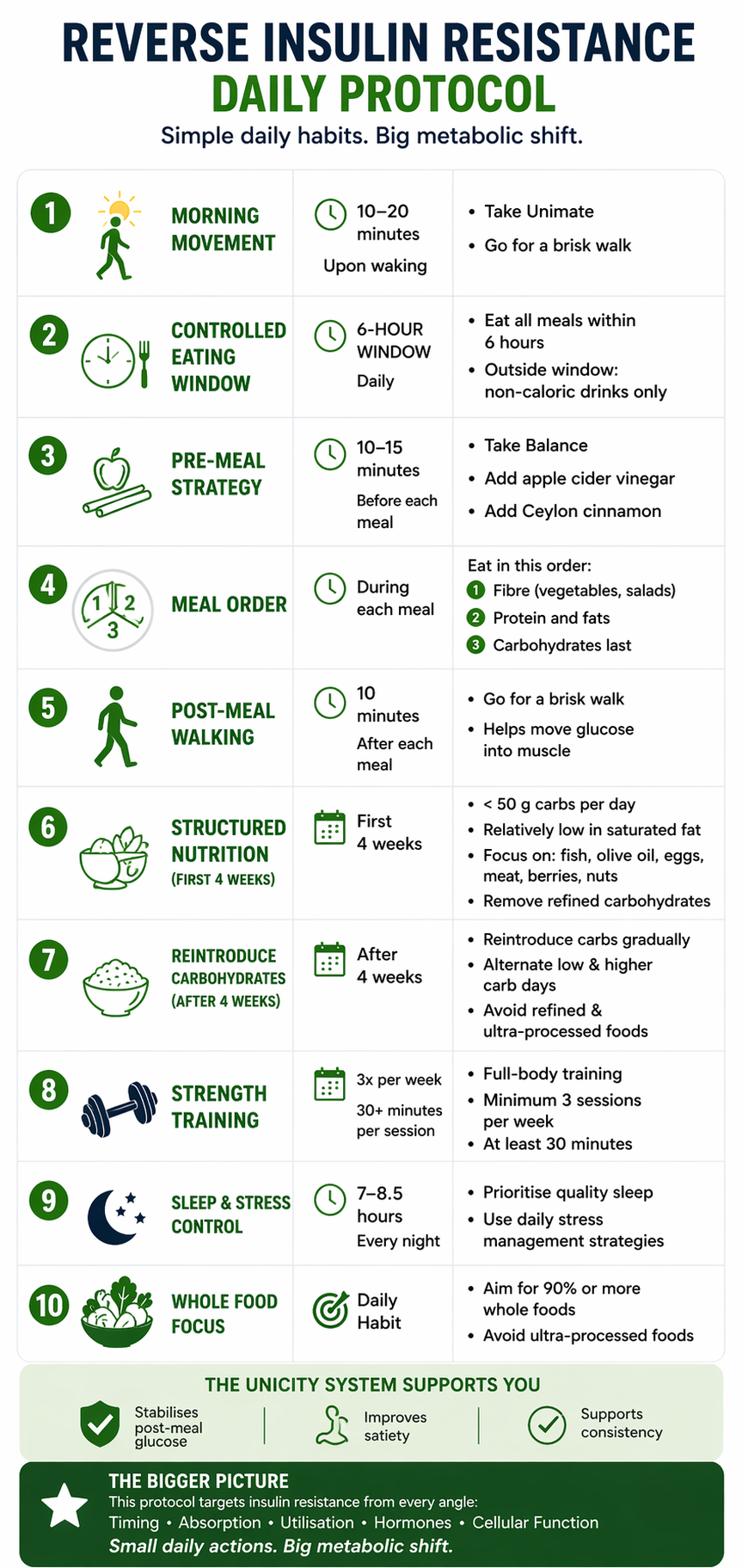
The support layer that makes the reset work harder.
Fibre is not just about eating more roughage. The useful move is to combine different fibre types with herbs and spices that increase the plant compound density of your meals.
Why fibre matters for metabolic health
Some fibres slow digestion and reduce the speed at which glucose enters the bloodstream. Others are fermented by gut bacteria, helping produce short chain fatty acids such as butyrate. That combination can support post meal glucose control, satiety, gut barrier health, bowel regularity and healthier cholesterol balance.
Build fibre gradually over several weeks, drink enough water and rotate sources. Going from low fibre to high fibre overnight is a fast route to bloating, not better health.
Get Fibre BalanceHerbs and spices for metabolic health
You do not need all of these every day. A practical target is three to five different herbs and spices across your meals. This improves the plant compound density of the diet without adding sugar, calories or processed ingredients.
| Herb / Spice | Why it may help | How to use it |
|---|---|---|
 Cinnamon Cinnamon |
One of the most studied spices for glucose control. Human trials and meta analyses suggest possible support for fasting glucose, HbA1c and lipid markers, especially in people with impaired glucose control. | Add to oats, yoghurt, smoothies, coffee or protein shakes. Choose Ceylon cinnamon for regular use. |
 Ginger Ginger |
Contains gingerols and shogaols studied for glucose control, lipids, blood pressure and inflammation. Evidence is mixed, but it remains a useful culinary tool. | Use fresh ginger in stir fries, soups, teas, smoothies and dressings. |
 Turmeric Turmeric |
Contains curcumin, a heavily studied plant compound linked with insulin signalling, inflammation and metabolic markers. | Add to eggs, curries, soups, rice dishes and warm drinks. Pair with black pepper and fat. |
 Fenugreek Fenugreek |
Rich in soluble fibre and bioactive compounds that may slow carbohydrate digestion and support glucose control. | Add ground fenugreek to curries, soups, stews and spice blends. |
 Garlic Garlic |
Contains sulphur compounds such as allicin and S allyl cysteine, studied for glucose and lipid metabolism. | Use fresh garlic in cooked meals, dressings, roasted vegetables and marinades. |
 Black Cumin Black Cumin |
Also known as Nigella sativa. Contains thymoquinone, studied for glucose, lipids, inflammation and oxidative stress. | Sprinkle seeds onto salads, eggs, roasted vegetables or savoury yoghurt bowls. |
 Saffron Saffron |
Best known for mood and antioxidant research, with emerging evidence for glycaemic control. | Add a small pinch to rice, soups, stews or warm drinks. |
 Cumin Cumin |
Contains antioxidant and anti inflammatory compounds. Evidence suggests possible support for glucose, triglycerides and waist circumference. | Add to roasted vegetables, soups, chilli, curries, dressings and meat dishes. |
 Cardamom Cardamom |
Studied for glucose metabolism, lipids, inflammation and fatty liver markers, although evidence is still developing. | Add to coffee, chai, porridge, smoothies, yoghurt or rice dishes. |
 Chilli Chilli |
Contains capsaicin, which activates TRPV1 receptors involved in energy metabolism, appetite, fat oxidation and inflammation. | Add chilli flakes, fresh chilli or cayenne to savoury meals, sauces and marinades. |
 Coriander Seed Coriander Seed |
Studied for glucose, lipids and oxidative stress. Human evidence is still smaller but promising. | Use ground coriander in curries, soups, stews, roasted vegetables and dressings. |
 Sage Sage |
Early clinical evidence suggests possible support for glucose and lipid markers. | Add to roasted vegetables, chicken, turkey, eggs, soups and bean dishes. |
 Rosemary Rosemary |
Contains rosmarinic acid, carnosic acid and other polyphenols with antioxidant and anti inflammatory properties. | Add to roasted vegetables, lamb, chicken, soups, potatoes and olive oil marinades. |
 Black Pepper Black Pepper |
Contains piperine, best known for improving curcumin absorption from turmeric. | Use freshly ground black pepper with savoury meals, especially when using turmeric. |
 Fennel Fennel |
Contains anethole and other plant compounds with antioxidant and metabolic effects. Human evidence is still limited. | Use fennel seeds in teas, curries, roasted vegetables, fish dishes and digestion focused blends. |
Top herbs and spices by strength of human evidence
This ranks the ingredients by the strength of human evidence for glucose control, insulin sensitivity, lipid metabolism and cardiometabolic markers. Culinary use is not the same as high dose supplementation.
| Tier | Herb / Spice | Effective dose used in studies | Primary mechanism |
|---|---|---|---|
| Strong | Cinnamon |
1 to 6 g per day | Cinnamaldehyde and polyphenols may support insulin signalling, glucose uptake and post meal glucose control. |
| Strong | Fenugreek |
5 to 25 g per day seed powder, or standardised extract | Galactomannan fibre slows carbohydrate absorption, while 4 hydroxyisoleucine may support insulin secretion. |
| Strong | Turmeric / Curcumin |
500 to 1,500 mg per day curcuminoids, or 1 to 3 g turmeric powder | Curcumin may activate AMPK, support insulin sensitivity and reduce inflammatory signalling. |
| Strong | Garlic |
600 to 1,200 mg per day garlic powder or aged garlic extract | Organosulphur compounds may support glucose control, cholesterol metabolism and endothelial function. |
| Strong | Black Cumin / Nigella sativa |
1 to 3 g per day seed powder, or 500 mg oil twice daily | Thymoquinone may reduce oxidative stress, support beta cell function and improve lipid metabolism. |
| Solid | Ginger |
1.2 to 3 g per day | Gingerols and shogaols may slow carbohydrate digestion, support insulin signalling and reduce oxidative stress. |
| Solid | Saffron |
30 to 100 mg per day standardised extract | Crocin, crocetin and safranal may support antioxidant protection, GLUT4 activity and glycaemic control. |
| Solid | Cumin |
1 to 3 g per day powder, or standardised extract | Cuminaldehyde and polyphenols may support insulin secretion, glucose handling and triglyceride metabolism. |
| Solid | Cardamom |
3 g per day powder | May support glucose metabolism, blood pressure and lipid markers through antioxidant and anti inflammatory effects. |
| Solid | Sage |
500 to 1,500 mg per day powder or extract, or sage tea | May support insulin sensitivity, glucose handling and cholesterol balance. |
| Solid | Chilli / Capsaicin |
Around 2 to 6 mg per day capsaicinoids | Capsaicin activates TRPV1 receptors, which may support thermogenesis, fat oxidation and lipid metabolism. |
| Promising |  Sumac Sumac |
1.5 to 3 g per day powder, often 6 to 12 weeks | Rich in gallic acid and tannins, which may support lipid metabolism, antioxidant status and inflammatory markers. |
| Promising | Coriander Seed |
1 g per day seed powder | May support insulin secretion, lipid metabolism and oxidative stress balance. |
| Promising |  Bay Leaf Bay Leaf |
1 to 3 g per day powder | Polyphenols and eugenol may support insulin receptor signalling and glucose handling, but evidence is still thin. |
| Promising | Black Pepper / Piperine |
5 to 20 mg per day piperine in studies, or culinary black pepper with turmeric | Piperine improves curcumin bioavailability and may support glucose, liver enzyme and lipid markers. |
Useful evidence to keep the section grounded.
Important note: Culinary use is generally very different from high dose supplementation. Anyone taking medication for diabetes, blood pressure, blood thinning, cholesterol or liver conditions should speak with a qualified health professional before using concentrated spice extracts. This section is educational and not medical advice.
Use the tools, but let the routine do the work.
Balance and Unimate are there to create anchors. They make the protocol easier to start, easier to repeat and easier to stick to when life gets busy.
What changes when the routine finally sticks.
This is not a promise of identical results. It is the realistic behavioural arc people need to understand before they start.
1 to 14
Control begins
The eating window starts to feel manageable. You stop grazing all day and begin noticing which foods affect your energy.
15 to 30
Energy steadies
Cravings often become easier to manage. The morning walk and pre meal routine become less of a decision.
31 to 60
Habits lock in
Post meal walks, simple meals and strength training start doing the heavy lifting. The plan feels less like effort and more like structure.
61 to 90
A new normal
You are no longer guessing. You know when to eat, how to build meals and what to do after them.
Real stories build trust faster than more claims.
Short video testimonials help people see the routine in a more human way. Keep the stories honest, specific and focused on lived experience.
Customer story
A real customer experience with the Metabolic Reset protocol.
Customer story
A clear, believable story focused on routine, energy and consistency.
Customer story
A short testimonial that builds trust without making exaggerated claims.
Research informed, not miracle marketing.
The science section is intentionally short. It gives visitors proof without turning the page into a textbook.
Time restricted eating
Early time restricted feeding has been shown to improve insulin sensitivity, blood pressure, oxidative stress and appetite in men with prediabetes, even without weight loss.
Read the studyPost meal walking
A 2025 study found a 10 minute walk immediately after glucose intake lowered peak glucose compared with resting.
Read the studyMeal order
Research shows eating vegetables and protein before carbohydrates can reduce post meal glucose and insulin responses.
Read the studySoluble fibre
A meta analysis found soluble fibre supplementation improved HbA1c, fasting glucose and insulin resistance markers in people with type 2 diabetes.
Read the studyFibre type matters
Different fibres behave differently. Galactomannans, beta glucans and resistant starch have all been studied for glucose and lipid markers.
Read the reviewUnicity evidence
Brand owned evidence should be treated carefully, but Unicity lists studies on Feel Great, glycaemic variability and cardiometabolic markers.
View Unicity studiesRight person, right promise.
This section helps you decide whether the protocol genuinely fits your life.
This is for you if
- You want a clear routine, not another vague diet.
- You struggle with cravings, energy dips or constant hunger.
- You want to support long term metabolic health.
- You are willing to walk after meals and train consistently.
- You like simple rules that remove daily decision fatigue.
This is not for you if
- You want a magic supplement to fix everything.
- You are not willing to change your eating pattern.
- You want extreme weight loss claims.
- You are trying to replace medical care or prescribed medication.
- You are not willing to repeat boring basics.
Important questions, answered clearly.
Is this a diet?
No. It is a daily structure. You will still need to make better food choices, but the protocol focuses on timing, meal order, fibre, movement, strength training and consistency.
Do I need to eat in a 6 hour window forever?
No. The tighter eating window is best treated as a reset tool. Once the routine is established, some people move to a more flexible window while keeping the pre meal and post meal habits.
Can I do this if I take medication?
Speak to your doctor or healthcare provider first, especially if you take glucose lowering medication, blood pressure medication or have a diagnosed medical condition.
Do I have to walk after every meal?
That is the goal, but start with the meal that usually makes you crash the hardest. A short walk done consistently beats a perfect plan you never follow.
Can I still eat carbohydrates?
Yes. The first phase reduces refined carbohydrates to make the reset easier. After that, better carbohydrate sources can be reintroduced gradually, ideally around training.
Are Unimate and Balance essential?
The lifestyle routine matters most. Unimate and Balance are tools that make the routine easier by creating a morning anchor and a pre meal anchor.
Start with structure. Stay for the results.
The people who win with metabolic health are rarely the ones chasing complexity. They are the ones who repeat the right basics long enough for them to matter.